


Behind the Lens: How We Capture Those Epic Wildlife Shots!

When you scroll through our Instagram feed or flip through the photo gallery here on the website, you see the perfect moments: the crisp shot of a Hummingbird on the wing, a bull elk’s iconic bugle, or an owl staring right down the barrel of the lens. What you don't often see is the 4:00 AM alarm clock, the frozen fingers, endless miles of hiking, or the 99 blurry, out-of-focus photos that we immediately delete. Capturing ethical, stunning wildlife photography isn't about expensive gear (though it helps); it's about strategy, patience, and a whole lot of failure. This post is a peek behind the curtain, sharing the real process—the triumphs, the failures, and the non-negotiable rules we follow to get the shot.


The most crucial piece of "gear" we carry isn't the zoom lens; it’s patience. Wildlife photography often means sitting perfectly still for hours in conditions that aren't comfortable. For the photo of the long-eared owl, we spent several days scouting its territory (in negative temperatures!) before having even a glimpse of the owl. It’s a waiting game that digital entertainment has trained most people out of having the patience for, but it’s the only way to get a genuine, non-intrusive shot.

But, before we even consider the rule of thirds or aperture settings, we adhere to a strict code of ethics: the well-being of the animal always comes first. This means we never use bait to lure animals in for a better shot. We use long-range telephoto lenses to maintain a respectful distance. If an animal changes its behavior because of our presence—if a deer stops grazing and stares at us, or a herd of elk moves away—we are too close, and we pack up and leave immediately. A great photo is never worth stressing the wildlife or disrupting their natural cycle. We practice "Leave No Trace" photography as strictly as we practice "Leave No Trace" camping.
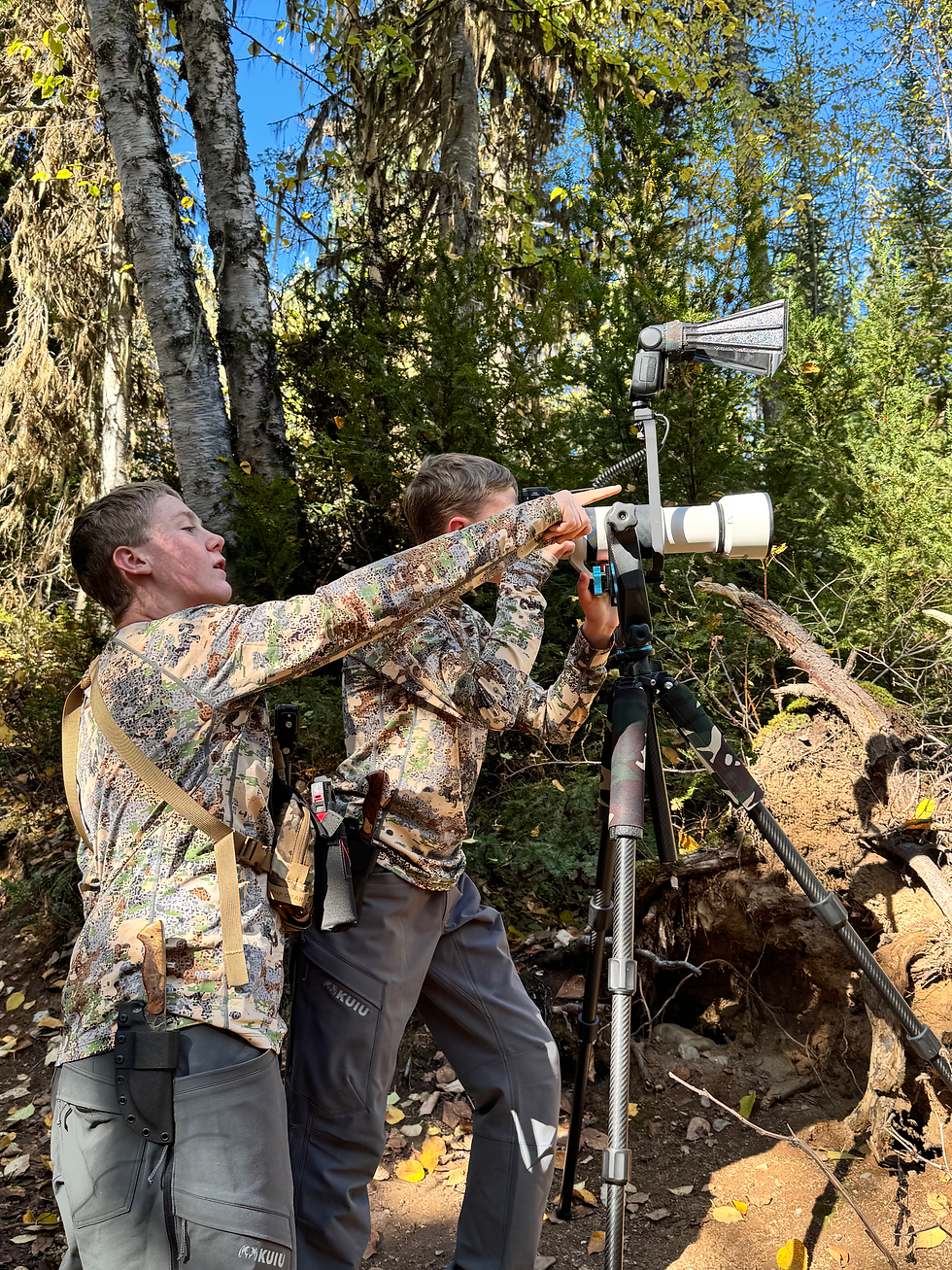
The right tools don't guarantee a great shot, but they make the moments when luck strikes out. For most of our long-range wildlife photography, we rely on durable, weather-sealed mirrorless cameras that can handle dust and rain anytime, anywhere. The real workhorse is a fast telephoto zoom lens—ours is a Sony 100-400mm and a Canon 100-500mm which allows us to capture detail from a safe distance. Such as this Western Wood-Pewee tending to her chicks in Yellowstone. It was essential to photograph the intimacy of the moment, but a safe distance comes before the shot, which is where our super telephoto lenses come into play.

We also always use a sturdy tripod; you simply cannot hand-hold a long lens steady enough for sharp results at dusk or dawn.
Our essential safety gear for capturing moments in the dark includes durable headlamps, tough apparel and strong hiking boots that can handle the unforgiving terrain.
The journey to capturing an "epic" wildlife shot is rarely a straight line; it's full of blurry pictures, missed opportunities, and incredibly long waits. But those moments of failure make the success stories so much sweeter. The true reward isn't just the photo you hang on the wall, it's the intimate understanding you gain of the natural world and the animal you observed for hours. So next time you head out into the wilderness, bring your camera (or just your phone), pack a little extra patience, and start practicing your focus. You'll likely fail 99 times, but that 100th picture will be unforgettable. Show us your best "epic" shots in the comments below or tag us on social media!

Comments